View this newsletter online here
August Events
August 9, 2022: Naked Barley & Dry Bean Field Day, Corvallis, OR
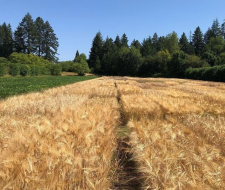 In Corvallis, Oregon: Join the Organic Naked Barley and Dry Bean Field Day on Tuesday, August 9th from 2-4 pm at the Lewis-Brown Horticultural Farm. At the event we’ll share the latest research going on for the OREI multi-use naked barley project, see some ready-to-harvest spring barley trials, and see a large dry bean variety trial! This event is free and open to the public, so please share with your networks. We do ask that you register in advance so we can get an idea of how many people will be in attendance. Register HERE
August 24, 2022: Plant Breeding Field Day, Madison, WI
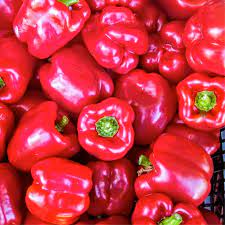 In Madison, Wisconsin: Are you interested in variety trialing and selection, seed saving, and getting involved in collaborative breeding projects in the Midwest? Us, too! You’re invited to join OSA’s Michael Lordon for the Midwest Collaborative Plant Breeding Field Day in Madison, WI on August 24th from 2-5PM at the West Madi. The field day will include a farm tour of University of Wisconsin-Madison’s West Madison Agricultural Research Station featuring Seed to Kitchen Collaborative projects involving organic tomatoes, peppers, and other crops. The event will also include educational presentations and discussions for farmers, gardeners, and students interested in regional seed adaptation and plant breeding for organic systems. Please register for the event HERE
August 21st, 2022: Farm to Flavor Dinner, Madison, Wisconsin
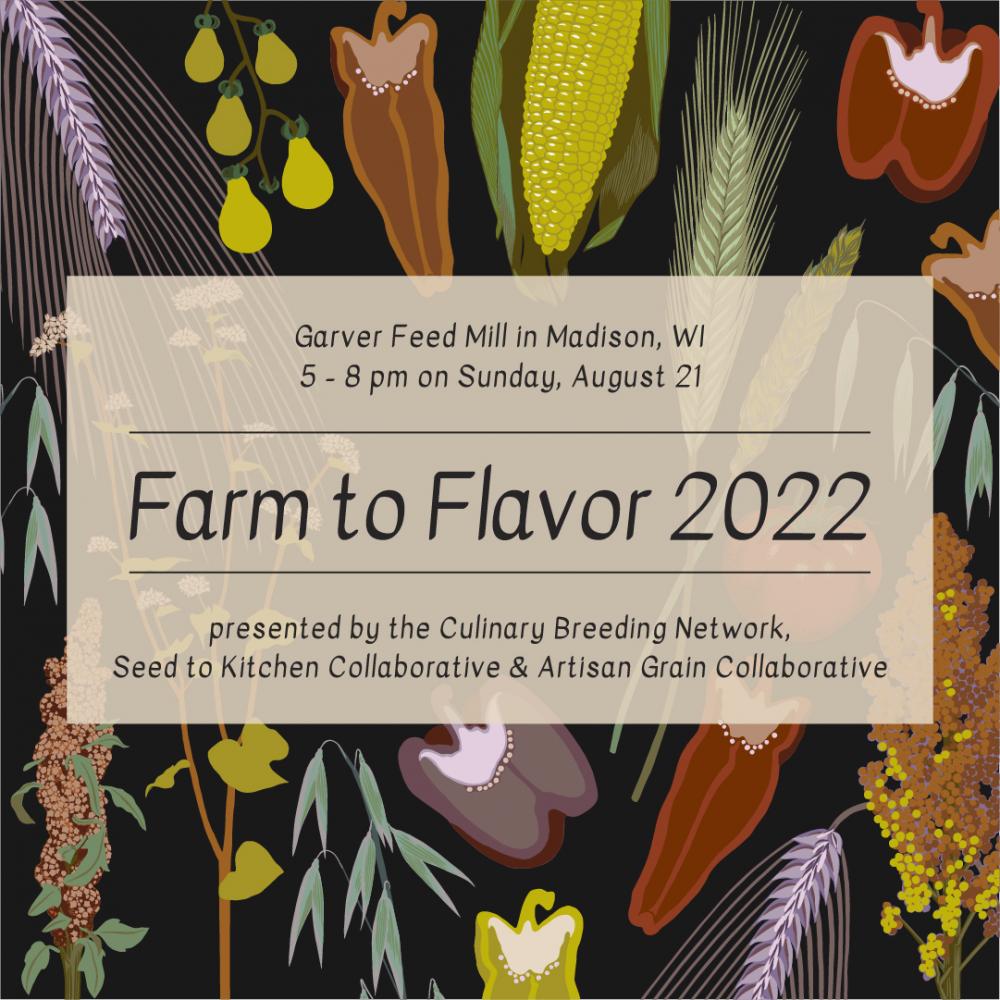 Join us for an engaging evening of conversation, learning and tasting brought to you by the Culinary Breeding Network, Seed to Kitchen Collaborative and Artisan Grains Collaborative. This year's Farm to Flavor dinner will have a special emphasis on grains. The event takes place on Sunday, August 21, 2022 from 5-8PM at the Garver Feed Mill in Madison, WI. Tickets are $35 and registration is available at https://farmtoflavor2022.bpt.me.
Crops: Barley, Wheat, Oats, Kernza, Rye, Maize, Carrot, Potato, Tomato, Tromboncino Squash, Hazelnut and more.
Breeding Programs: University of Wisconsin-Madison, Oregon State University, University of Minnesota, University of California-Davis, Cornell University, University of Illinois, South Dakota State University, University of Vermont, Organic Seed Alliance, KC Tomato, CreativeBotanics, Hazzard Free Farms, Frogsleap Farm.
This event is organized by University of Wisconsin, Oregon State University, Artisan Grain Collaborative and Cornell University. Funding from the USDA-OREI-NIFA project Value-Added Grains for Local and Regional Food Systems II.
Save the Dates: New Webinars in Fall, 2022
Organic Breeding of Peas and Lentils for Plant-Based Protein
 Join us for a webinar on October 20, 2022: Organic Dry Pea and Lentil Adaptation to South Carolina for Plant-based Protein Production: NIFA-OREI project update, by Dil Thavarajah of Clemson University. Organic plant-based proteins are gaining in popularity. Contrary to consumer perception, organically grown pulse crops have lower protein content. Our long-term goal is to breed dry pea and lentil cultivars suitable for organic production with higher protein content and better adaptation to protein isolation. We will discuss the best cultivars ideal for organic production, nutritional quality, and the market value for organic protein producers and food processors. This project is built on our previous OREI and Good Food Institute funded projects to refine the breeding pipeline to develop protein-biofortified organic dry pea and lentil for plant-based protein applications that will lead to economically rewarding sustainable organic farms. Find more information and register for the webinar here: https://eorganic.org/node/35519
Learn more about this project here: https://www.clemson.edu/cafls/organic-breeding/orei/index.html.
Webinar Series on Soil Health in Urban Agriculture
 In collaboration with the NIFA OREI-funded Tomato Organic Management and Improvement and the Carrot Improvement for Organic Agriculture projects, we are offering a new 5-webinar series on nurturing soil health in urban agriculture!
Urban farming can bring lots of benefits, but soils in cities can be degraded and, in some cases, contaminated. This can make vegetable crops more susceptible to pests and put farmers and consumers at risk. During this webinar series, participants will learn how to determine if their soils are contaminated and what they can do to minimize risks while producing healthy and nutritious organic vegetable crops. They will also learn how to restore degraded soils in cities and quantify whether their efforts are paying off. All webinars are free, take place at 11AM Pacific, 12 Mountain, 1 Central, 2 Eastern Time, and advance registration is required. Please register for as many webinars as you like at the links below!
October 19, 2022: Testing Soils for Heavy Metals and Developing Effective Remediation Strategies.
Dr. Anna Paltseva, Endowed Assistant Professor in Environmental Science School of Geosciences, University of Louisiana at Lafayette, Chair-Elect of the Urban & Anthropogenic Soils, Soil Science Society of America.
Register now at https://oregonstate.zoom.us/webinar/register/WN_ZjFG1adDQFyAWIgaM_7A-w
October 26, 2022: Exploring Behaviors and Interventions to Reduce Soil Contaminant Exposure Among Community Gardeners and Farmers.
Dr. Candis M. Hunter, PhD, MSPH, REH, Environmental Health Specialist.
Register now at https://oregonstate.zoom.us/webinar/register/WN_6QTUCKm2SMyTWwOadq7SaA
November 2: Design And Management Strategies for Regenerating Healthy Soils Through Urban Agriculture.
Dr. John Taylor, Associate Professor of Agroecology at the University of Rhode Island.
Register now at https://oregonstate.zoom.us/webinar/register/WN_wMp6injxQbqeQi_nMnB0MA
November 9: Combining Soil Amendments and Varietal Development to Prevent Pathogens and Heavy Metal Uptake.
Dr. Lori Hoagland, Professor of Soil Microbial Ecology in the Department of Horticulture and Landscape Architecture at Purdue University.
Register now at https://oregonstate.zoom.us/webinar/register/WN_NakrvB9hR8WXo9rhlfemWw
November 16: Understanding Laboratory Soil Health Tests: Where Are We Now and Where Are We Going?
Dr. Roland Wilhelm, Assistant Professor of Soil Microbiology in the Department of Agronomy at Purdue University.
Register now at https://oregonstate.zoom.us/webinar/register/WN_zEsQ4xw1TBOuTXeymJgugg
Proposed Organic Livestock and Poultry Rule to be published and public comment period opening August 9
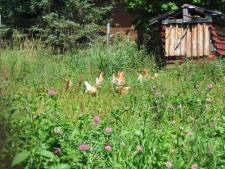 Today, the U.S. Department of Agriculture (USDA) previewed the Organic Livestock and Poultry Standards (OLPS) proposed rule in the Federal Register. With this rule, USDA proposes requirements for organic poultry and livestock living conditions, care, transport, and slaughter. The proposed rule is scheduled to be published on August 9 and when it is, you should be able to see it and submit comments on this page (at the moment, the preview is available): https://www.federalregister.gov/public-inspection/2022-16980/national-organic-program-organic-livestock-and-poultry-standards
NOP will also host a public webinar listening session on August 19, 2022, to hear oral comments on the proposed rule. Those who want to submit comments must register to do so by August 15th. If you aren't submitting comments you don't have to register. The information on registration and also how to join the webinar will also be posted here: https://www.ams.usda.gov/event/listening-session-organic-livestock-and-poultry-standards. Additional information is available here.
National Agricultural Library Webinar on Corn: August 9
On August 9, the National Agricultural Library is hosting a webinar: "What does the future hold for corn and maize?" Learn about the influence of corn and maize on public health and society. Hear perspectives on food security, environmental impact, community resilience, and a vision for the future. Presenters: Denisa Livingston, M.P.H. Community Health Advocate at Diné Community Advocacy Alliance who is a food justice organizer who advocates for tribal communities by focusing on public health and foodways of Native people and promoting better health through indigenous foods; Psyche Williams-Forson, Professor and Chair in the Department of American Studies at the University of Maryland College Park. Her research is focused on the ways in which Black people engage their material worlds, especially with food and food cultures. Some of her recent projects focus on food shaming and race in America. The webinar is free and takes place at 1PM Eastern Time. No registration required--more information and the Zoom link can be found here.
Congratulations to Jim Myers, 2022 ASHS Fellow
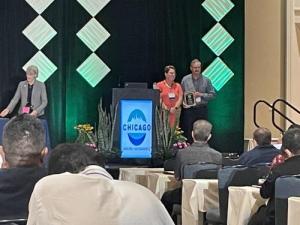 Congratulations to James R. Myers on his selection as a 2022 American Society for Horticultural Science (ASHS) Fellow! Jim is the Baggett-Frazier Endowed Professor of Vegetable Breeding and Genetics at Oregon State University, and has taught agronomy, breeding, genetics and horticulture classes at the University of Kentucky-Lexington, University of Idaho, Kimberly and Oregon State University. He has had a prolific career breeding vegetable crops for fresh market and processing with improved nutrition, disease resistance and suitablity for organic production, including beans, tomatoes, broccoli, squash, sweet corn and habanero pepper. Jim directs the Northern Organic Vegetable Improvement Collaborative (NOVIC) and is a collaborator on the Tomato Organic Management and Improvement (TOMI) project. He also works with the Culinary Breeding Network which brings chefs and breeders together to develop varieties with desirable culinary qualities.
Some of his many variety releases include high anthocyanin 'Indigo' tomatoes, virus and insect-resistant dry beans, white mold-resistant snap bean germplasm, snap and snow peas with multiple disease resistance, and hybrid and open-pollinated broccoli bred for ease of harvest and adaptation to organic systems. In partnership with collaborators in Tanzania, he also developed high yielding, disease and insect-resistant dry beans adapted to eastern and southern Africa. In 2022, the ASHS also awarded Melike Cirak, one of his recent graduate students, and Jim the Vegetable Publication Award for their article Cosmetic Stay-green Trait in Snap Bean and the Event Cascade that Reduces Seed Germination and Emergence.
Jim has published over 80 peer-reviewed articles, 2 books, 15 book chapters, and many more conference proceedings, extension articles and newsletters. He has mentored 10 PhD and 17 Master's students, and advised many international advanced degree and undergraduate students. As a plant breeder, he has released 31 cultivars with 4 more close to release. Congratulations to Jim for this well-deserved honor!
eOrganic Mission and Resources
eOrganic is a web community where organic agriculture farmers, researchers, and educators network; exchange objective, research- and experience-based information; learn together; and communicate regionally, nationally, and internationally. If you have expertise in organic agriculture and would like to develop U.S. certified organic agriculture information, join us at https://eorganic.info
- Find all eOrganic articles, videos and webinars at https://www.eorganic.org
- Connect with eOrganic on Facebook and Twitter and Instagram and subscribe to our YouTube channel!
- Have a question about organic farming? Use the eXtension Ask an Expert service to connect with the eOrganic community to get an answer!